
Tough-as-Nails Plants That Actually Survive South Dakota Winters
'''## Tired of Gambling on Plants? Use This Sioux Falls Survivor's Guide.
Let's be honest: gardening in Sioux Falls can feel like a high-stakes bet. Our Zone 4b climate isn't for the faint of heart. We swing from hot, humid summers to bone-chilling winters with punishing winds and heavy snow. That cute shrub you bought at a big-box store in May? By February, it can be a frozen, brown casualty of our infamous freeze-thaw cycles.
It's frustrating and expensive. But here’s the secret: success isn’t about luck. It’s about choosing the right plants from the start. We're talking about the truly tough, reliable, "why-didn't-I-plant-this-sooner?" varieties that look at a South Dakota winter and barely flinch.
This isn't a list of delicate, fussy specimens. This is our hands-on guide to the bombproof trees, shrubs, and perennials that we’ve seen thrive right here in the Sioux Empire for decades. These are the plants that form the backbone of a smart, resilient landscape design that saves you money and heartache.
The Unkillable Trees: More Than Just Maples
When you think of trees in Sioux Falls, you probably think of silver maples. They're fast, they're everywhere, but they also have weak wood that's prone to breaking in our ice storms. You can do better. A well-chosen tree is a multi-generational investment.
- Swamp White Oak (Quercus bicolor): Don't let the name fool you; it's surprisingly tolerant of our clay soils once established. This is a tough, majestic shade tree with beautiful, peeling bark. It's slower growing, but that means strong, storm-resistant wood. It provides incredible value to local wildlife.
- Hackberry (Celtis occidentalis): This is arguably the most underrated street and yard tree for our region. It's tough, adaptable to a wide range of soil conditions, and tolerates urban pollution and drought like a champ. The distinctive warty bark adds unique winter interest. It’s a key part of our native landscape, making it a natural fit for any hardscape project.
- Bur Oak (Quercus macrocarpa): The king of the prairie. A bur oak is a statement piece, a legacy tree. It's incredibly slow-growing, but it is absolutely invincible once it gets going. Its deeply furrowed bark and massive, fringed acorns are unmistakable. If you have the space, there is no tougher or more majestic tree for South Dakota.
Choosing the right tree means thinking long-term. Consider the mature size and avoid planting too close to your home or power lines. Proper initial plant selection is the most critical step.
Shrubs That Shrug Off the Cold
Shrubs are the workhorses of the landscape, providing structure, color, and privacy. But they often take the worst of the winter wind and snow. These picks are proven winners.
- ‘Gro-Low’ Sumac (Rhus aromatica 'Gro-Low'): This is a fantastic, low-growing, spreading shrub that is perfect for covering banks or tough, dry spots. It has fragrant leaves, turns a brilliant orange-red in the fall, and is utterly unfazed by drought, cold, or terrible soil. It’s a true problem-solver.
- Dogwood (Cornus sericea 'Baileyi' or 'Farrow'): You know these shrubs. They're the ones with the brilliant red stems that look incredible against the snow. Native to our area, they are built for our winters. They are fast-growing, great for creating screens, and provide critical food for birds. For a smaller footprint, look for the 'Arctic Fire' or 'Farrow' cultivars. Proper maintenance in the form of periodic pruning keeps that red color vibrant.
- Viburnums (Viburnum dentatum, V. trilobum): Specifically, Arrowwood Viburnum or American Highbush Cranberry. These are large, tough-as-nails shrubs that offer multi-season interest. You get spring flowers, dense summer foliage, and beautiful fall color and berries. They are far more reliable than the more "southern" viburnums you might see for sale. They make an excellent living fence.
Perennials That Actually Come Back
Perennials are the joy of the garden, but it's heartbreaking when they don't return after a harsh winter. The key is choosing plants with deep, robust root systems that laugh at our October 1st frost date. Forget the marginal Zone 5 plants; stick with these Zone 4 powerhouses.
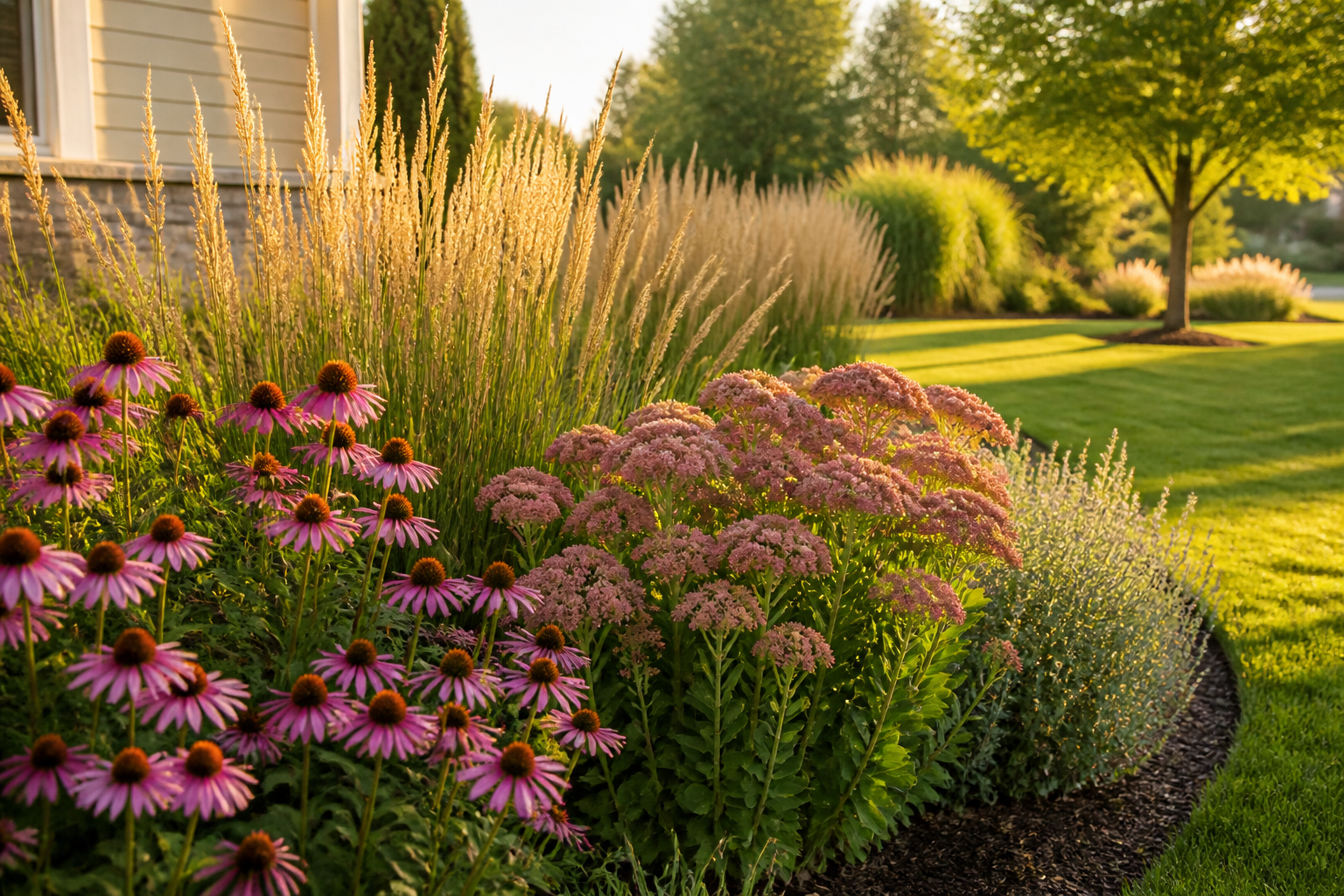
- Karl Foerster' Feather Reed Grass (Calamagrostis x acutiflora 'Karl Foerster'): The MVP of ornamental grasses. Its upright, architectural form is iconic. It emerges early in spring, provides a beautiful wheat-like plume in summer, and stands tall all winter long, providing incredible structure and sound in the garden. It is the definition of a four-season plant.
- 'Magnus' Purple Coneflower (Echinacea purpurea 'Magnus'): A classic for a reason. This isn't a fussy, over-hybridized new variety. 'Magnus' is a robust, award-winning coneflower with big, beautiful, non-drooping magenta petals. It feeds pollinators all summer and birds (with its seed heads) all winter. It loves the sun and shrugs off drought.
- Sedum 'Autumn Joy' (Hylotelephium 'Herbstfreude'): If you can kill this plant, you've achieved something special. 'Autumn Joy' is a succulent that looks good from the moment it emerges in spring to the day you finally cut it back a year later. It provides broccoli-like green heads in summer that mature to a dusky pink and then a rustic bronze in fall. It provides essential late-season nectar for bees and looks great dusted with snow. And it requires almost no irrigation.
- Salvia 'May Night' (Salvia nemorosa 'Mainacht'): For a splash of deep, rich color, 'May Night' Salvia is unbeatable. It produces spikes of intense indigo-blue flowers in early summer. If you shear it back after flowering, you'll often get a second, smaller flush of blooms. It's deer and rabbit resistant and thrives in the full, hot sun.
FAQ: Tough Plants for South Dakota
Why do plants from big stores often die here?
Many national chains stock their stores based on broad regional maps, not local microclimates. They might sell a plant rated for Zone 5, thinking it's "close enough." In the Sioux Empire, with our wind and rapid temperature drops, there's no such thing as close enough. We stick to Zone 4 or even Zone 3 plants for guaranteed survival. It’s about mitigating risk.
What's the biggest mistake people make when planting?
Besides choosing the wrong plant, the most common mistake is planting at the wrong depth and not watering correctly. Trees and shrubs are often planted too deep, burying the root flare, which slowly suffocates the plant. For perennials, inconsistent watering in the first few weeks prevents them from establishing the deep roots needed to survive both summer heat and winter deep-freezes. A properly installed irrigation system can solve this.
Does "drought-tolerant" mean I don't have to water?
No. It means the plant can *survive* periods of drought *once it is fully established*. Every new plant, regardless of its drought tolerance, needs consistent, deep watering for its first full season (sometimes two) to grow a healthy root system. This is especially true in our heavy clay soil, where it can be hard for water to penetrate.
Ready for a Landscape That Lasts?
Choosing the right plants is the foundation of a landscape that works with our South Dakota climate, not against it. It means less work, less wasted money, and more time simply enjoying your yard. While picking tough plants is the first step, putting them in the right place and ensuring they get the right care is just as important. If you're tired of the guesswork and want a resilient, beautiful landscape designed for the reality of living here, maybe it's time for a conversation. We can help you build a yard that you'll love for years to come. '''