
Native and Drought-Tolerant Plants for Sioux Falls Landscapes
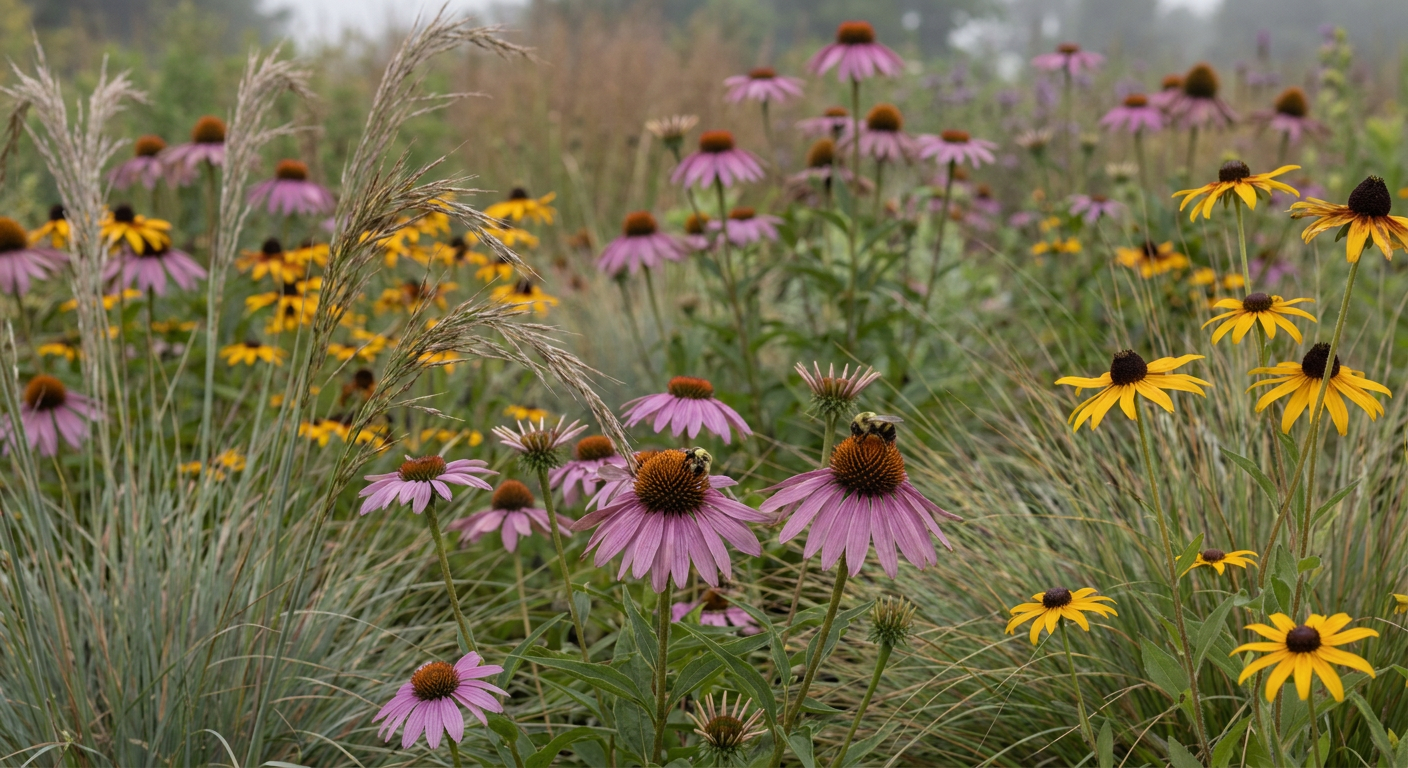
If you've spent more than one summer in the Sioux Empire fighting to keep a pristine, Kentucky-bluegrass-style lawn alive, you know the struggle. You water, you fertilize, you wage war on dandelions, and for what? A water bill that could fund a small navy and a patch of green that looks stressed out by August. There is a better way, a landscape that works with our climate instead of against it, built around beautiful, resilient native and drought-tolerant plants.
Why This Matters in South Dakota
Let's be blunt: eastern South Dakota is a tough place for delicate plants. Our climate isn't for the faint of heart, and your landscape is on the front lines. We live in a region of extremes, swinging from humid, hot summers to bone-chilling, windswept winters. Our USDA Hardiness Zone is 4b/5a, which means winter temperatures can plummet to -25°F. The ground freezes deep, and the repeated freeze-thaw cycles in spring and fall can heave less-adapted plants right out of the soil. Then there's the wind. It's not just a gentle breeze; it's a constant, moisture-sucking force that can desiccate plants in both summer and winter.
Compounding this is our soil. Most of us aren't blessed with deep, loamy topsoil. We're working with heavy clay. It holds water like a bathtub when it's wet, leading to root rot, and bakes into a brick-like substance when it's dry, making it nearly impossible for water to penetrate. Many of the popular, non-native ornamentals you find at big-box stores were bred for friendlier climates with better soil. They simply don't have the genetic tools to cope with our reality. They require constant coddling, amended soil, and more water than is often practical or responsible.
This is where a landscape built with native and drought-tolerant plants becomes less of a trend and more of a practical, long-term solution. These are the plants that have spent thousands of years adapting to this exact environment. Their deep root systems are designed to find moisture deep within our clay soils and anchor them against the wind. They are timed to our seasons, knowing when to grow and when to go dormant to survive the winter. They support local pollinators and wildlife that evolved alongside them. Choosing these plants means less work, less water, and a landscape that feels authentically of its place—a piece of the prairie in your own backyard.
The Foundation: Understanding Our Clay Soil
Before we even talk about specific plants, we have to talk about the ground they’ll live in. In Sioux Falls and much of eastern South Dakota, that means clay. Understanding the nature of this soil is the first and most important step in creating a successful landscape that doesn't require constant intervention. Clay soil is made of very fine mineral particles. When it gets wet, there's very little space between these particles for air, and water movement slows to a crawl. This is why you get standing water after a heavy rain and why plants that need "well-drained soil" often fail here; their roots literally suffocate and rot.
Conversely, when that clay dries out in the heat of July and August, it shrinks. The particles pack together so tightly that the soil becomes hydrophobic, actively repelling water. You can run a sprinkler for an hour and find that the moisture has only penetrated the top half-inch, with the rest running off. The ground cracks and becomes hard as concrete, making it incredibly difficult for plant roots to grow and expand in search of water and nutrients. It's a feast-or-famine environment for water availability, and it’s tough on plants.
So, what's a homeowner to do? For decades, the standard advice was to "amend" the soil by mixing in massive amounts of sand or peat moss. We now know this can often make things worse. Adding sand to clay can create a substance very similar to concrete. A better approach is to work *with* the clay. First, top-dress your beds with a few inches of high-quality compost. As worms and microorganisms work, they will gradually pull this organic matter down into the clay, slowly improving its structure over years. Second, and most importantly, select plants that are naturally adapted to heavy soils. Plants like prairie Blazing Star (Liatris) or Switchgrass have powerful root systems that can muscle their way through dense clay, creating channels that improve drainage and aeration over time. Mulching is also non-negotiable. A thick layer of wood mulch helps retain moisture, prevents the soil from baking in the sun, and suppresses weeds.
Bedrock of the Landscape: The Best Native and Drought-Tolerant Trees
Trees are the bones of your landscape. They provide structure, shade, and a sense of permanence that nothing else can. But planting the wrong tree in our climate is a costly, decades-long mistake. A tree that struggles with wind, drought, or our tricky soil will always look sickly and can become a liability. Choosing a tough, adapted species is the single most important long-term decision you'll make for your yard. These selections are proven winners for the Sioux Empire, providing beauty and resilience for generations.
Recommended Trees - **Bur Oak (Quercus macrocarpa):** If you could only plant one tree in South Dakota, this would be it. This is the king of the prairie. It's incredibly slow-growing, but that's a sign of its strength. It develops an exceptionally deep taproot that makes it virtually immune to drought once established. Its thick, corky bark is fire-resistant and protects it from winter sunscald. It can withstand our strongest winds and thrives in heavy clay soil. It's a critical habitat and food source for a huge range of wildlife. Planting a Bur Oak is a legacy decision.
- Hackberry (Celtis occidentalis): Often overlooked, the Hackberry is one of our toughest and most adaptable native trees. It's a fast grower and provides good shade. The distinctive warty, ridged bark adds fantastic winter interest. It's tolerant of a wide range of soil types, from wet clay to dry, compacted ground, and isn't bothered by urban pollution. Birds love the small, dark purple fruits that persist into winter. It might not be as majestic as an oak, but its reliability is second to none.
- Kentucky Coffeetree (Gymnocladus dioicus): Don't let the name fool you; it's native this far north. This tree is prized for its unique, rugged appearance. In winter, its coarse, stout branches create a bold architectural silhouette. In summer, its huge, doubly compound leaves create a lovely dappled shade that allows you to grow plants underneath it. It is highly tolerant of drought, alkaline soils, and urban conditions. The large seed pods add winter interest, but you may want to seek out a male, seedless cultivar if you don't want the mess.
- Ironwood / American Hophornbeam (Ostrya virginiana): A smaller, slow-growing understory tree that is perfect for smaller yards or planting in part shade beneath larger trees. It's incredibly handsome, with finely toothed leaves and bark that has a unique shredded appearance. The wood is, as the name implies, extremely dense and strong, making it resistant to ice and wind damage. It's tolerant of a wide range of conditions, including shade and dry soil.
- Serviceberry (Amelanchier spp.): This can be grown as a large shrub or a small, multi-stemmed tree. It's one of the best four-season plants for our area. In early spring, before most trees have leafed out, it's covered in clouds of delicate white flowers. These are followed by edible, blueberry-like fruits in June (if you can get to them before the birds do). The fall color is a brilliant display of orange and red, and the smooth, grey bark is attractive in winter. It’s a workhorse of beauty.
The Middle Layer: Hardy Shrubs and Grasses
If trees are the bones of the landscape, shrubs and ornamental grasses are the muscle and connective tissue. They fill the space between the ground and the tree canopy, provide structure, create privacy screens, and offer multi-season interest. In a region with a long winter, choosing shrubs with interesting bark or persistent structure is key to a yard that doesn't look barren for five months of the year. The grasses, born of the prairie, provide movement and texture that softens hardscapes and brings the landscape to life.
Shrubs for Structure and Wildlife - **Ninebark (Physocarpus opulifolius):** A fantastic native shrub that now comes in a range of cultivars with foliage colors from deep burgundy ('Diabolo') to bright chartreuse ('Dart's Gold'). It's tough as nails, tolerating drought, clay soil, and sun or part shade. Its real show is the exfoliating bark, which peels back in layers to reveal different colors, providing great winter interest. The clusters of white-pink flowers in late spring are also a bonus for pollinators.
- Aronia / Chokeberry (Aronia melanocarpa): Not to be confused with Chokecherry. This is an adaptable shrub that is gaining popularity for good reason. It forms a nice, rounded shape and isn't picky about soil. It offers three seasons of interest: white flower clusters in spring, glossy green leaves in summer, and incredible, fiery red-orange fall color. The dark purple-black berries that follow are extremely high in antioxidants (though very tart) and are a great food source for birds in winter.
- Sumac (Rhus spp.): We need to be specific here. Staghorn Sumac can be aggressive, but species like Fragrant Sumac ('Gro-Low') or Smooth Sumac offer incredible benefits without the rampant spreading. Fragrant Sumac is a low-growing, spreading groundcover shrub perfect for stabilizing slopes. It has fragrant leaves, insignificant but pollinator-friendly spring flowers, and absolutely spectacular orange, red, and purple fall color. It is incredibly drought-tolerant once established.
- Leadplant (Amorpha canescens): A smaller sub-shrub native to our prairies. This is a deep-rooted legume, meaning it fixes nitrogen in the soil, actively improving it for surrounding plants. It has gorgeous, silvery-grey foliage and spikes of purple flowers in mid-summer that are an absolute magnet for bees. It thrives in full sun and dry conditions where other plants would wither.
Ornamental Grasses for Movement and Texture - **Little Bluestem (Schizachyrium scoparium):** A cornerstone of the tallgrass prairie. This is a clump-forming grass that won't spread aggressively. It has a blue-green color during the summer that transitions to a stunning mix of copper, orange, and reddish-purple in the fall. That color persists through the winter, providing incredible visual interest against the snow. It's drought-tolerant and prefers full sun and even poor soil.
- Prairie Dropseed (Sporobolus heterolepis): Perhaps the most graceful and well-behaved of the native grasses. It forms a perfect fountain-like mound of fine, hair-like green foliage. In late summer, it sends up delicate, airy flower panicles that have a unique scent—some say like coriander, others say like buttered popcorn. The fall color is a beautiful golden-orange. It's slow-growing but exceptionally long-lived and drought-proof once established.
- Switchgrass (Panicum virgatum): A taller, more upright native grass that provides a strong vertical element in the garden. It is incredibly adaptable to both wet and dry soils. Modern cultivars offer great color, like the popular 'Northwind' with its steel-blue foliage or 'Shenandoah' which develops deep red tips in mid-summer that intensify in the fall. The seed heads provide food for birds and the strong stems stand up well to snow.
Color and Life: Top Perennials for the Sioux Empire
Perennials are the jewels of the garden, providing seasonal color, attracting pollinators, and filling in the gaps around your shrubs and trees. But in our climate, they need to be more than just pretty faces. The best perennials for South Dakota are tough, self-sufficient, and offer more than just a fleeting week of blooms. The following are proven performers that thrive in our sun, wind, and soil, requiring minimal care once they are established. They are the core of a vibrant, low-maintenance garden filled with life.
Sun-Loving Prairie Powerhouses - **Purple Coneflower (Echinacea purpurea):** A classic for a reason. Its big, daisy-like purple flowers are a staple of the summer garden, blooming from July through September. They are incredibly attractive to bees and butterflies. After the petals drop, the spiky seed heads provide food for goldfinches and add structural interest through the winter. They are very drought-tolerant and unfussy about soil.
- Blazing Star / Liatris (Liatris spicata): The unique, purple flower spikes of Liatris bloom from the top down, a peculiar trait that makes them stand out. They are a monarch butterfly magnet. Native to prairies, their corm-like roots are excellent at muscling through heavy clay soil, making them a great choice for improving soil structure. They provide a strong vertical accent in the mid-summer garden.
- Butterfly Milkweed (Asclepias tuberosa): If you want to support monarch butterflies, this is a must-have. It's the host plant for monarch caterpillars and its brilliant orange flower clusters are a beacon for all sorts of pollinators. Unlike other milkweeds, it doesn't have milky sap and forms a well-behaved clump. It has a deep taproot, which means it resents being moved but also makes it exceptionally drought-tolerant. It loves full, hot sun.
- Prairie Smoke (Geum triflorum): A truly unique native groundcover for early spring. It has low, ferny foliage and nodding pinkish-red flowers in May. The real show begins after the flowers are done, when the seed heads develop into feathery, pinkish plumes that resemble puffs of smoke, especially when backlit by the sun. It's a tough, charming, and unusual addition to a dry, sunny spot.
- Wild Bergamot / Bee Balm (Monarda fistulosa): A powerhouse for attracting native bees. The lavender, tubular flowers are perfectly shaped for them. It will spread to form a nice patch, so give it some room. It thrives in average to dry soil and full sun. The minty fragrance of the leaves is an added bonus. Keeping it in full sun with good air circulation helps prevent the powdery mildew it can sometimes be prone to.
- Black-Eyed Susan (Rudbeckia hirta): The cheerful yellow, dark-centered flowers are the epitome of late summer. They bloom for a very long time and are tough, reliable, and self-seed just enough to ensure they'll be back year after year without becoming a nuisance. There are many great varieties, from the classic 'Goldsturm' to taller species that wave in the wind.
Designing a Tough and Beautiful South Dakota Landscape
Having a list of great plants is one thing; arranging them into a cohesive, attractive landscape is another. The good news is that designing with native and drought-tolerant plants follows the same principles as any good design—thinking in layers, repeating forms and colors, and planning for four-season interest. The difference is that your plant palette is tougher, more resilient, and better suited to our environment.
Thinking in Layers and Groupings A common mistake is "polka-dot" planting—one of this, one of that, scattered around the yard. A more effective approach is to plant in layers and groupings. - **The Backbone:** Start with your trees and large shrubs. These create the structure and define the main spaces of your yard. - **The Middle Layer:** Use medium-sized shrubs and taller ornamental grasses to connect the trees to the ground. Plant them in drifts or groups of 3, 5, or 7 to create a more natural, impactful look. Use them to screen unwanted views or define the edge of a patio. - **The Ground Layer:** This is where your perennials and smaller grasses come in. Weave them in front of and around the shrubs. Repeating a single perennial, like Black-Eyed Susan or Prairie Dropseed, throughout a bed can tie the whole design together.
Sample Combinations for Full Sun For that hot, dry strip along the driveway or a south-facing foundation, you need plants that can take the heat. - **Backbone:** Bur Oak or Hackberry (if space allows), Sumac for a large shrub. - **Mid-Layer:** A drift of Little Bluestem grass paired with a grouping of Ninebark. - **Front Layer:** Masses of Purple Coneflower, Butterfly Milkweed, and Liatris, with the fine texture of Prairie Smoke at the very edge. This combination provides blooms from spring through fall, great texture, and incredible pollinator support.
Sample Combinations for Part Shade This might be the north side of your house or the area under a large, established tree. - **Backbone:** Serviceberry or Ironwood are perfect smaller trees for these spots. - **Mid-Layer:** Aronia (Chokeberry) tolerates part shade well. Its white flowers will brighten the space in spring and its fall color is superb. - **Front Layer:** While many prairie plants need full sun, some are more adaptable. Wild Columbine (Aquilegia canadensis) with its delicate red and yellow flowers, and Zigzag Goldenrod (Solidago flexicaulis) which blooms in late summer shade, are excellent choices. Ferns and sedges (Carex spp.) also thrive here and provide beautiful texture.
The key is to mimic nature. In a prairie, you don't find plants in neat little rows. They grow in communities, intermingling and creating a living tapestry. A well-designed native landscape has this same sense of intentional, beautiful wildness.
The First Year is Critical: Establishment vs. Low Water
The term "drought-tolerant" can be misleading. It does not mean "no-water." It means a plant has the ability to survive periods of drought once it is established. That establishment period, which is typically the first one to two growing seasons, is absolutely critical. During this time, your job is to provide the right kind of watering to encourage the plant to develop the deep, extensive root system it needs to become self-sufficient. This is the single biggest factor that determines the long-term success of your native and drought-tolerant plants.
The wrong way to water is a light, frequent sprinkle every day. This encourages the plant to develop a shallow, lazy root system right at the surface of the soil. These roots are vulnerable to drying out quickly in the summer heat and can be damaged by our deep winter freezes. The plant becomes dependent on you for its daily drink and never develops the resilience it was bred for.
The right way to water is deeply and infrequently. During the first growing season, give your new plants a long, slow soaking once a week, or twice a week during the hottest, driest parts of summer. The goal is to get the water to penetrate at least 6-8 inches down into the soil profile. This forces the roots to grow downward in search of that deep moisture, building the foundation for drought tolerance. You can use a soaker hose snaked through the bed or just turn your hose on a slow trickle at the base of each plant. Always check the soil before watering; if it's still moist a few inches down, wait another day or two.
Mulch is your best friend in this process. A 2-3 inch layer of wood chip or shredded bark mulch over your garden beds does several important things: - It dramatically slows the evaporation of water from the soil surface. - It keeps the soil temperature more consistent, protecting roots from extreme heat. - It prevents weed growth, which would otherwise compete with your new plants for water and nutrients. - Over time, it breaks down and adds organic matter to the soil.
Do not pile mulch directly against the stems or trunks of your plants, as this can trap moisture and lead to rot. Leave a small "donut" of space around the base of each plant. By the second or third year, most of these plants will need little to no supplemental water except during the most extreme, prolonged droughts.
When to Call a Pro
You can absolutely create a beautiful garden with native and drought-tolerant plants on your own, especially if you're starting small. Reading this article is a great first step. However, there are situations where bringing in a professional landscaper can save you time, money, and a lot of frustration in the long run.
Consider calling a company like ours if you're dealing with a large-scale project, like a brand new construction home with nothing but bare clay, or a complete renovation of an existing, overgrown yard. We have the equipment and expertise to handle large-scale site preparation, including grading for proper drainage—something that's crucial with our heavy soils. We can also perform a proper soil analysis to understand its specific composition and pH, which helps in making the most precise plant recommendations.
Developing a cohesive, long-term master plan is another area where professional help is invaluable. It's easy to get caught up in buying individual plants that look good at the nursery, but a professional designer can help you see the big picture. We're trained to think about how the landscape will look in 5, 10, and 20 years. We plan for the mature size of trees and shrubs, create functional outdoor living spaces, solve problems like screening the neighbor's garage, and ensure the entire property feels unified and intentional.
Finally, sourcing and installing large trees and shrubs is a job best left to the experts. We have access to high-quality stock from specialty growers that you may not find in retail nurseries. More importantly, we know how to plant them correctly to ensure their long-term health, from digging the right size hole to managing the heavy root ball. If your vision for a resilient, low-maintenance landscape feels overwhelming, let's talk. A good plan is the best investment you can make in your property.
The Bottom Line
Creating a landscape that thrives in eastern South Dakota doesn't have to be an uphill battle. It's about shifting your perspective from fighting our climate to embracing it. By choosing native and drought-tolerant plants that are genetically programmed to handle our clay soil, our whipping winds, and our extreme temperatures, you create a garden that is not only beautiful but resilient and alive. This approach reduces your water bill, minimizes the need for fertilizers and pesticides, and provides critical habitat for the local birds and pollinators that are part of our prairie heritage. It's a practical, common-sense way to garden that gives you more time to actually enjoy your yard and less time working on it. A landscape that works with South Dakota, not against it, is a landscape that will reward you for decades to come.